Grocery shopping in Brazil is one of the best ways to taste the country: fresh mangoes, warm pão de queijo, real Brazilian coffee. But a busy supermarket can feel intimidating when your Portuguese is new. The good news: with about 40 phrases, you can find what you need, ask the price, order at the counter and pay like a local.
A translator app can translate your question, but it can’t help you understand the cashier’s answer. That’s what this guide is for.
Grocery Shopping in Brazil: Quick Reference
12,90
“DOZE E NOVENTA”
The checkout question that surprises visitors
The cashier will often ask CPF na nota? (“Do you want your tax ID on the receipt?”). Visitors don’t have a CPF, so just answer Não, obrigado/obrigada.
Five phrases to know before you go
| Portuguese | English |
|---|---|
| Onde fica…? | Where is…? |
| Esse aqui, por favor. | This one here, please. |
| Quanto é? | How much is it? |
| Débito ou crédito? | Debit or credit? |
| Obrigado / Obrigada. | Thank you. |
Golden rule: say Bom dia or Boa tarde before you ask for anything. In Brazil, skipping the greeting can come across as rude.
Table of Contents
- Grocery Shopping in Brazil: Quick Reference
- Finding What You Need
- Ordering at the Counter
- Asking the Price
- Quantities and Weights
- Weighing Your Own Produce
- Checkout: What the Cashier Will Ask You
- Paying: Card, Cash or Pix
- Reading Labels and Spotting Deals
- Saying Thank You and Goodbye
- Quiz: Are You Ready to Shop in Brazil?
- Grocery Shopping in Brazil FAQ
- Final Thoughts
1. Finding What You Need
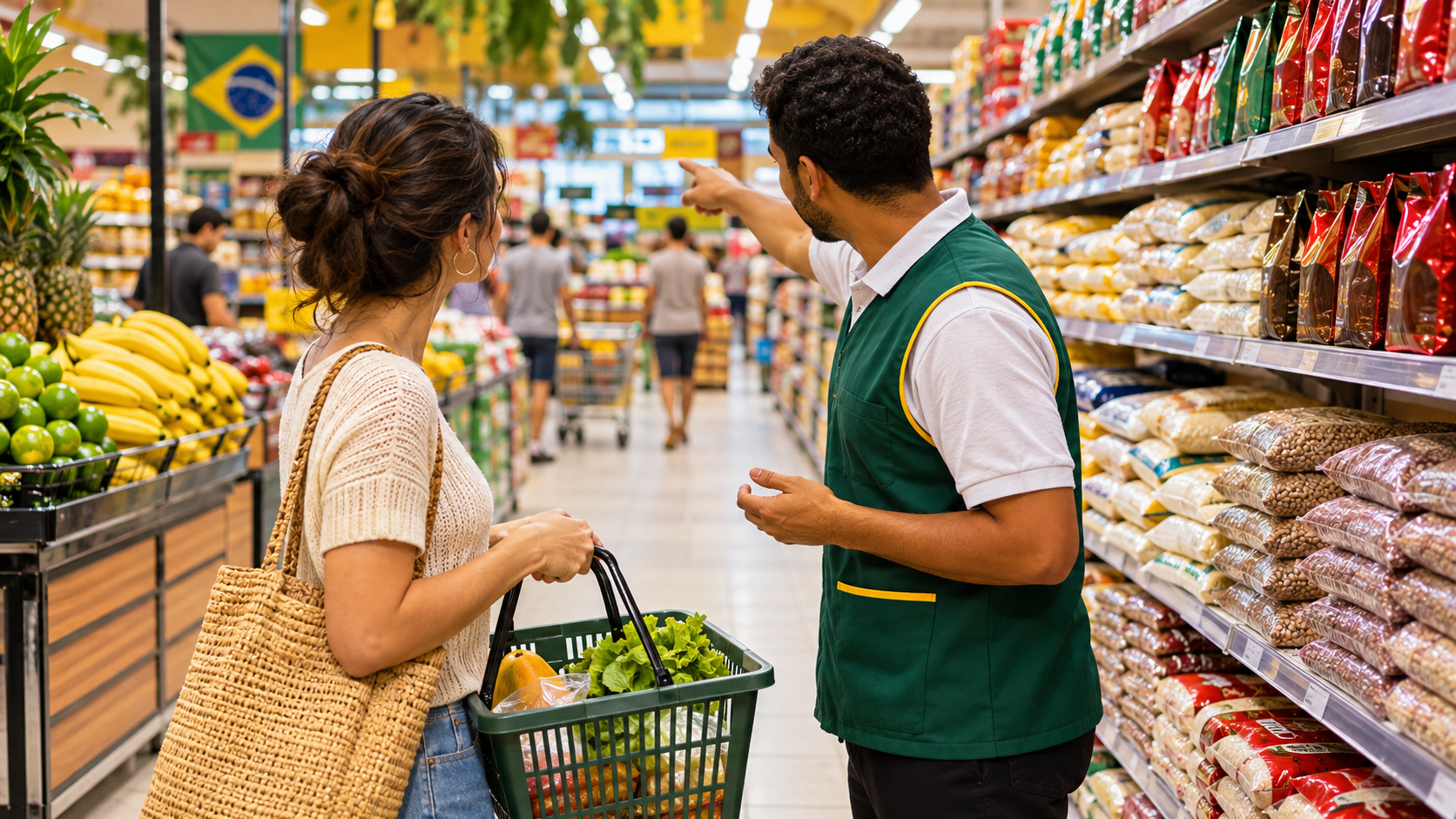
supermercado – supermarket
Start every interaction with a greeting, then ask your question:
| Portuguese | English | When to use it |
|---|---|---|
| Bom dia! / Boa tarde! / Boa noite! | Good morning! / Good afternoon! / Good evening! | Greet staff and cashiers |
| Com licença. | Excuse me. | Get an employee’s attention |
| Onde fica o leite? | Where is the milk? | Find a section or item |
| Onde tem açúcar? | Where can I find sugar? | Very common, a little more casual |
| Vocês têm pão de queijo? | Do you have cheese bread? | Check whether the store sells it |
| Onde fica o caixa? | Where is the checkout? | When you’re ready to pay |
Try it: find an employee and say “Com licença, onde fica o arroz?” (“Excuse me, where is the rice?”). They’ll point or walk you there.
2. Ordering at the Counter
At the bakery (padaria), deli (frios) or butcher (açougue) counter, an attendant serves you. You’ll hear Pois não? (“How can I help you?”) or Próximo! (“Next!”). Don’t know the name of what you want? Just point. Brazilians use isso for almost everything, and aquilo for something farther away:
| Portuguese | English |
|---|---|
| Isso, por favor. | This/that, please. |
| Esse aqui, por favor. | This one here, please. (essa aqui for feminine words) |
| Aquele ali, por favor. | That one over there, please. (aquela ali for feminine words) |
| Pode fatiar, por favor? | Can you slice it, please? |
| Mais fino, por favor. | Thinner, please. |
When you’re done, the attendant will ask Mais alguma coisa? (“Anything else?”). Answer Só isso, obrigado/obrigada (“That’s all, thank you”). To hear real store conversations with native audio, try How to Ask for Something at a Store (Premium Plus).
3. Asking the Price
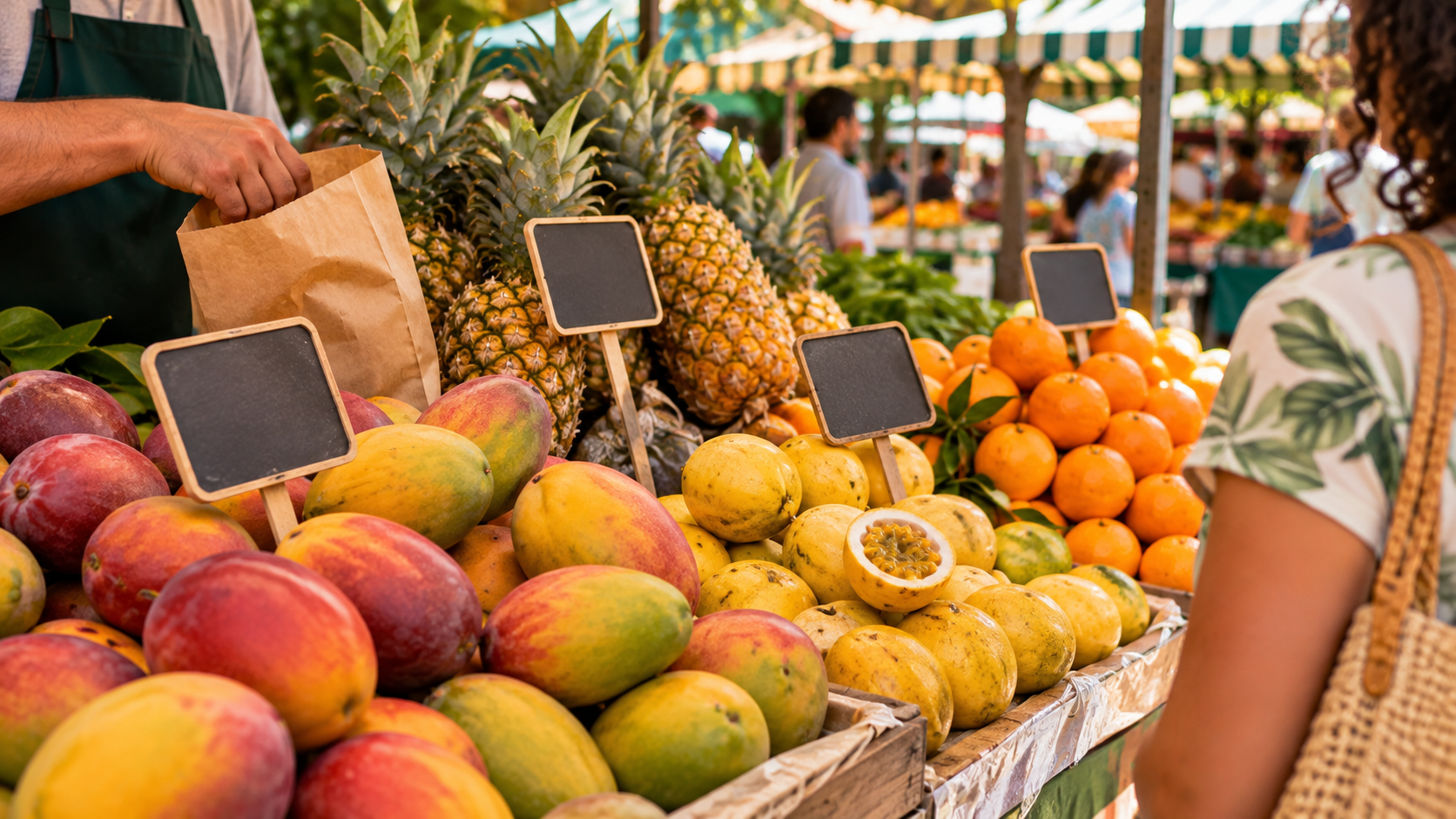
preço – price
| Portuguese | English |
|---|---|
| Quanto custa? | How much does it cost? |
| Quanto é? | How much is it? (shorter, just as common) |
| Quanto é o quilo? | How much per kilo? |
| Quanto fica? | How much does it come to? (for the total) |
How Brazilians say prices: prices use a comma for the decimal (R$ 12,90), and people usually drop the words reais and centavos. So R$ 5,50 is cinco e cinquenta, R$ 12,90 is doze e noventa, and R$ 23,99 is vinte e três e noventa e nove.
| 1–10 | Tens |
|---|---|
| 1 um · 2 dois · 3 três · 4 quatro · 5 cinco | 20 vinte · 30 trinta · 40 quarenta · 50 cinquenta |
| 6 seis · 7 sete · 8 oito · 9 nove · 10 dez | 60 sessenta · 70 setenta · 80 oitenta · 90 noventa · 100 cem |
Didn’t catch it? Say Pode repetir, por favor? (“Can you repeat that, please?”) or look at the register display.

In the video lesson How to Ask the Price of Something, our teacher walks you through a real shopping conversation, so you can practice asking prices and understanding the answer before your trip. For more shopping words with native audio, see the Shopping Vocabulary Builder.
Understand prices the first time
Prices go by fast at the register. Watch the video lesson and practice with native speakers until “doze e noventa” sounds easy.
Watch the Lesson4. Quantities and Weights
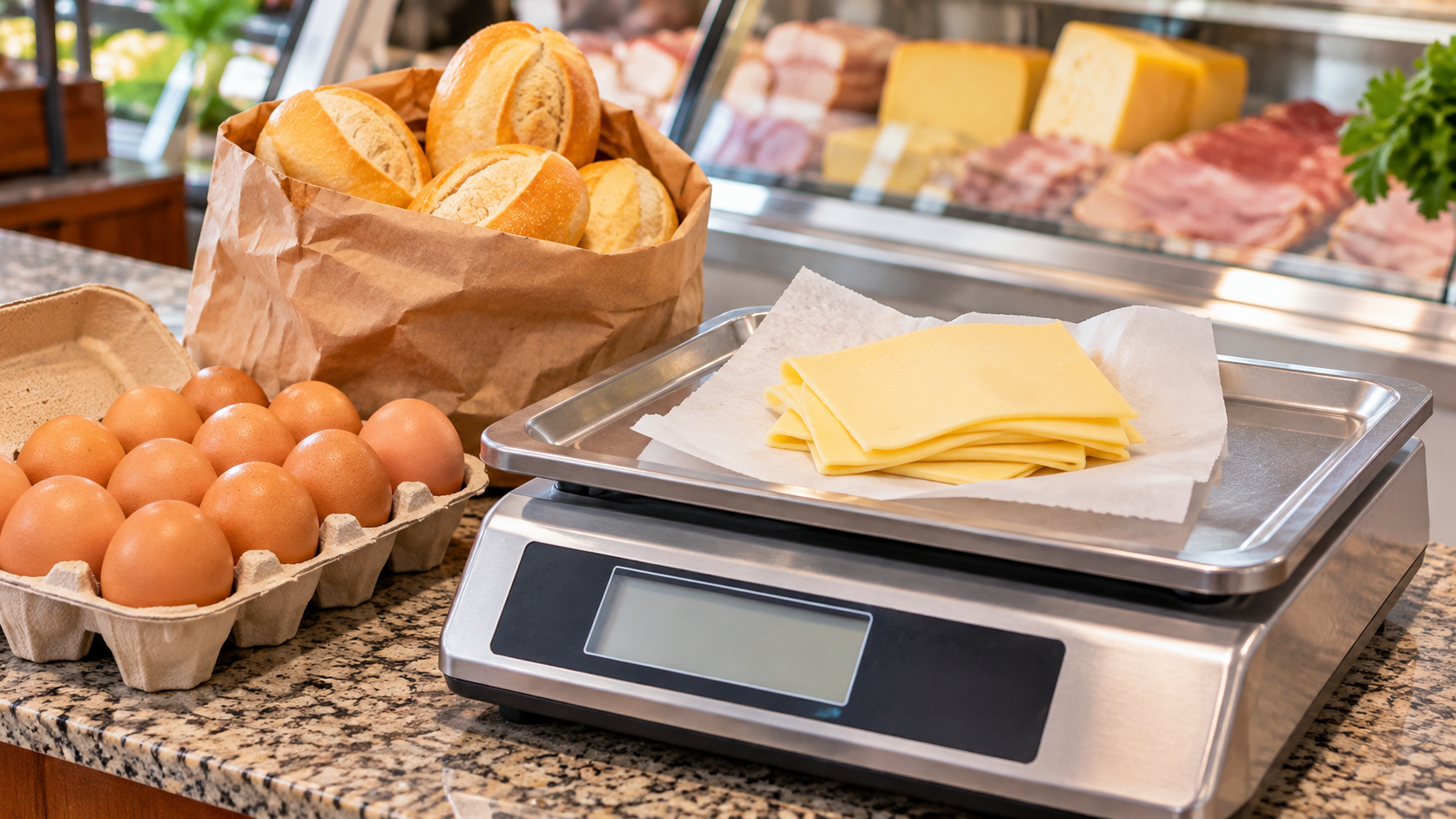
queijo – cheese
ovos – eggs
In Brazil, fruit, vegetables, cheese and cold cuts are sold by weight. To order, say the amount, then de, then the item:
| Portuguese | English |
|---|---|
| cem gramas | 100 grams |
| duzentos gramas | 200 grams |
| meio quilo | half a kilo |
| um quilo | one kilo |
| uma dúzia de ovos | a dozen eggs |
| Duzentos gramas de queijo, por favor. | 200 grams of cheese, please. |
| Cinco pãezinhos, por favor. | Five bread rolls, please. (rolls are sold by the unit) |
5. Weighing Your Own Produce
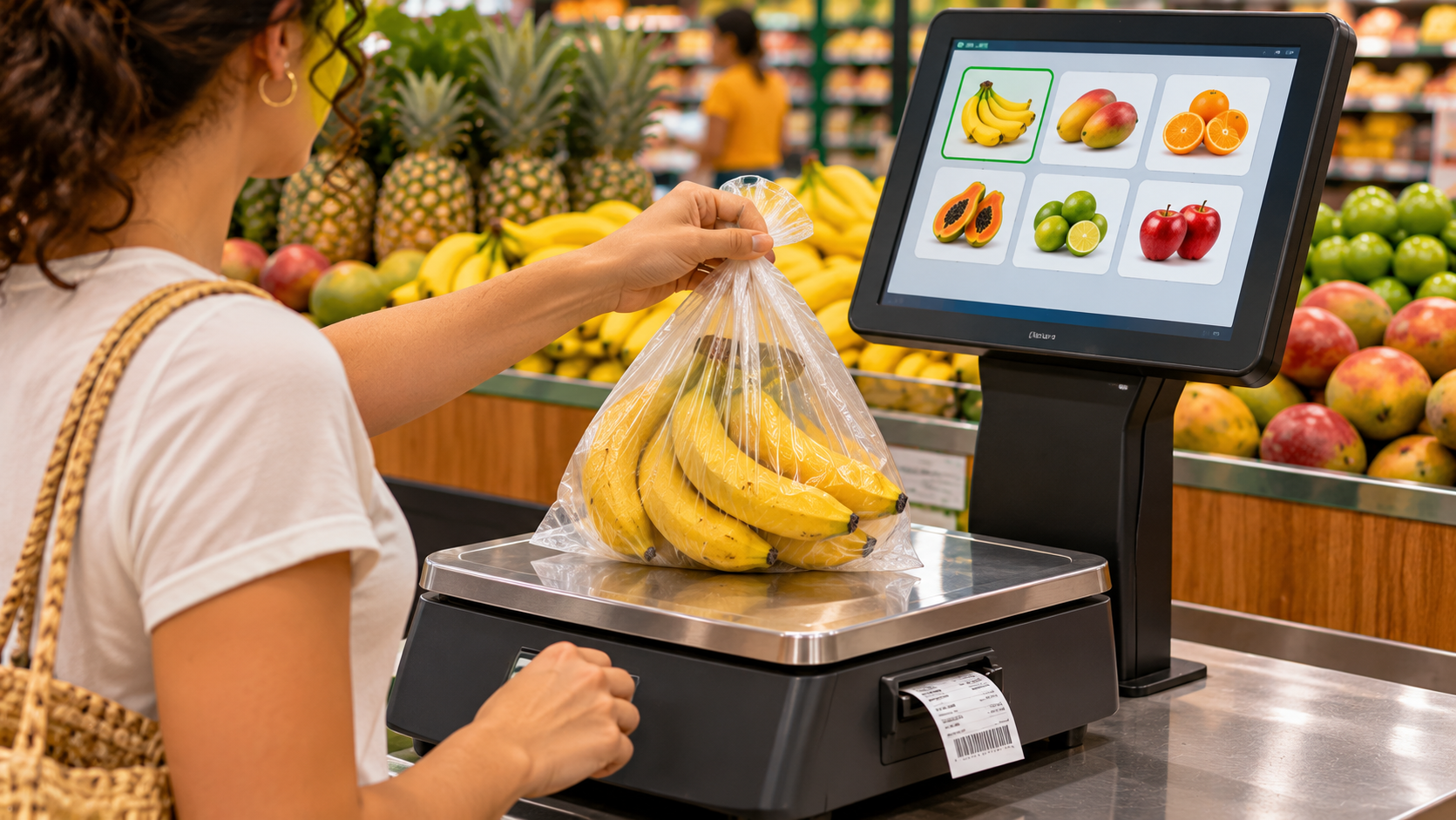
banana – banana
In many Brazilian supermarkets, you weigh fruit and vegetables yourself before checkout:
- Put your produce in one of the plastic bags provided.
- Find the scale (balança) in the produce section.
- Weigh the bag and select your item (self-service scales usually show pictures).
- Stick the printed price label on the bag.
No self-service scale? Ask an employee: Pode pesar isso, por favor? (“Can you weigh this, please?”). If you skip this step, the cashier may have to send someone to weigh it, and the whole line waits.
6. Checkout: What the Cashier Will Ask You
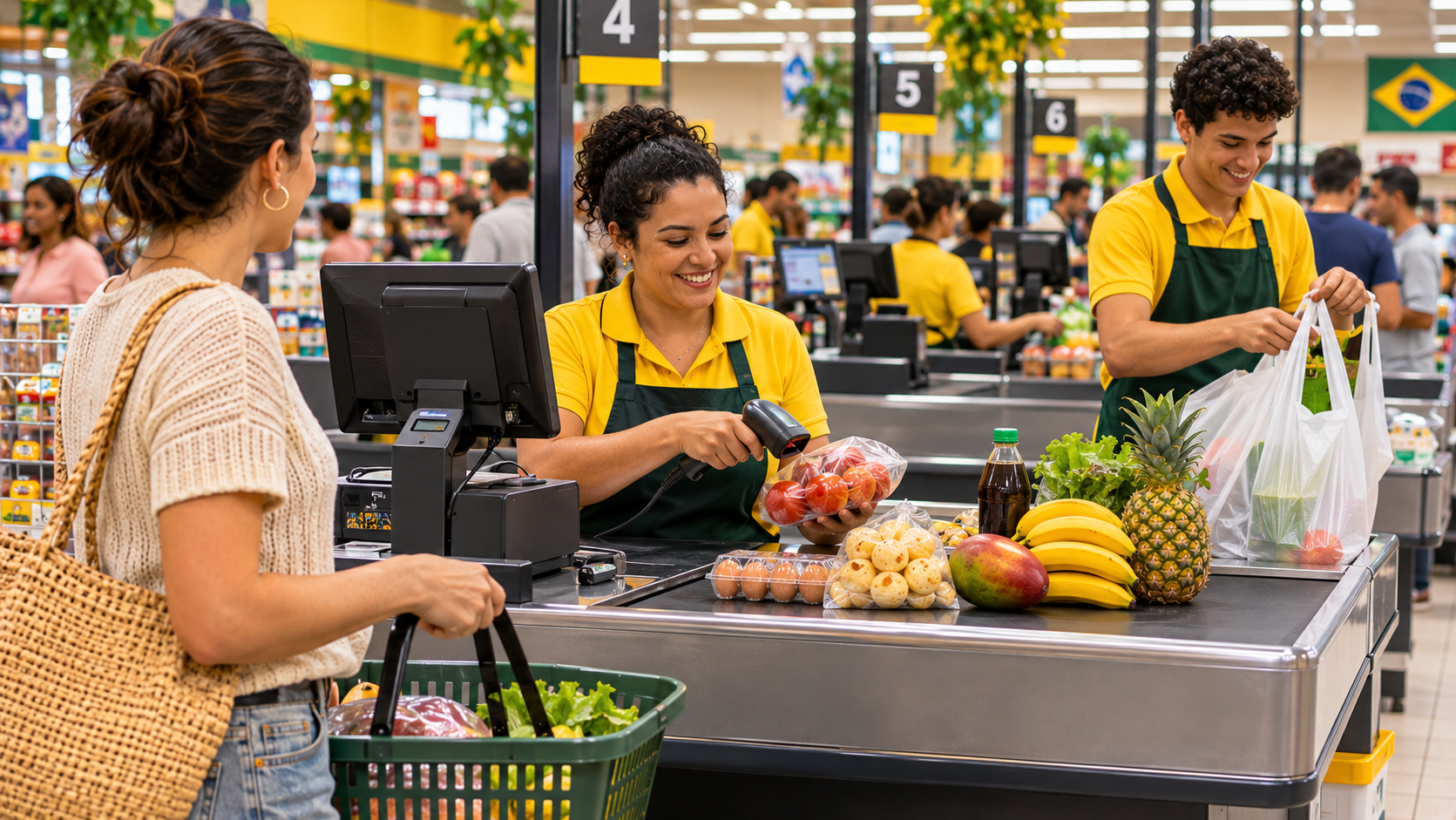
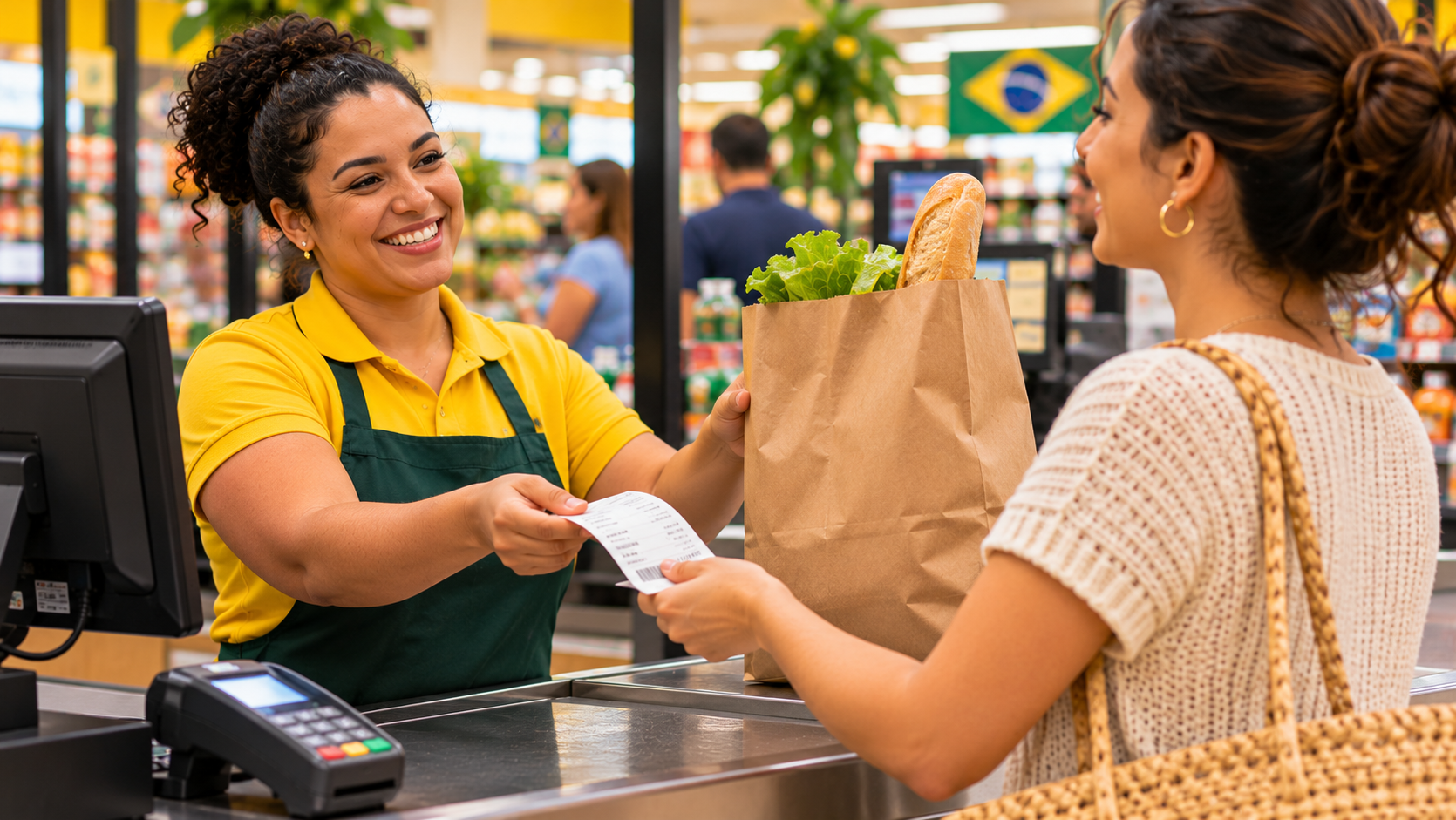
A moça do caixa está dando o troco e a sacola de compras para o cliente. – The cashier is giving the customer their change and shopping bag.
Join the fila (line) at a caixa (register). The caixa rápido is the express lane; the caixa preferencial is for elderly shoppers, pregnant women and people with disabilities, so don’t join it unless you qualify. At the register, you’ll hear some or all of these:
| You’ll hear | It means | You can answer |
|---|---|---|
| CPF na nota? | Do you want your tax ID on the receipt? | Não, obrigado/obrigada. |
| Precisa de sacola? | Do you need a bag? | Sim, por favor. / Não, obrigado/obrigada. |
| Vai pagar como? | How are you paying? | Cartão. / Dinheiro. / Pix. |
| Débito ou crédito? | Debit or credit? | Crédito, por favor. |
| Quer a nota? | Do you want the receipt? | Sim, por favor. |
There may be a bagger (empacotador/empacotadora) at the end of the belt. That’s normal, and you don’t need to tip. To hear a full checkout conversation, try Can Shop at a Grocery Store (Level 1.2), part of our step-by-step Pathway for beginners.
7. Paying: Card, Cash or Pix
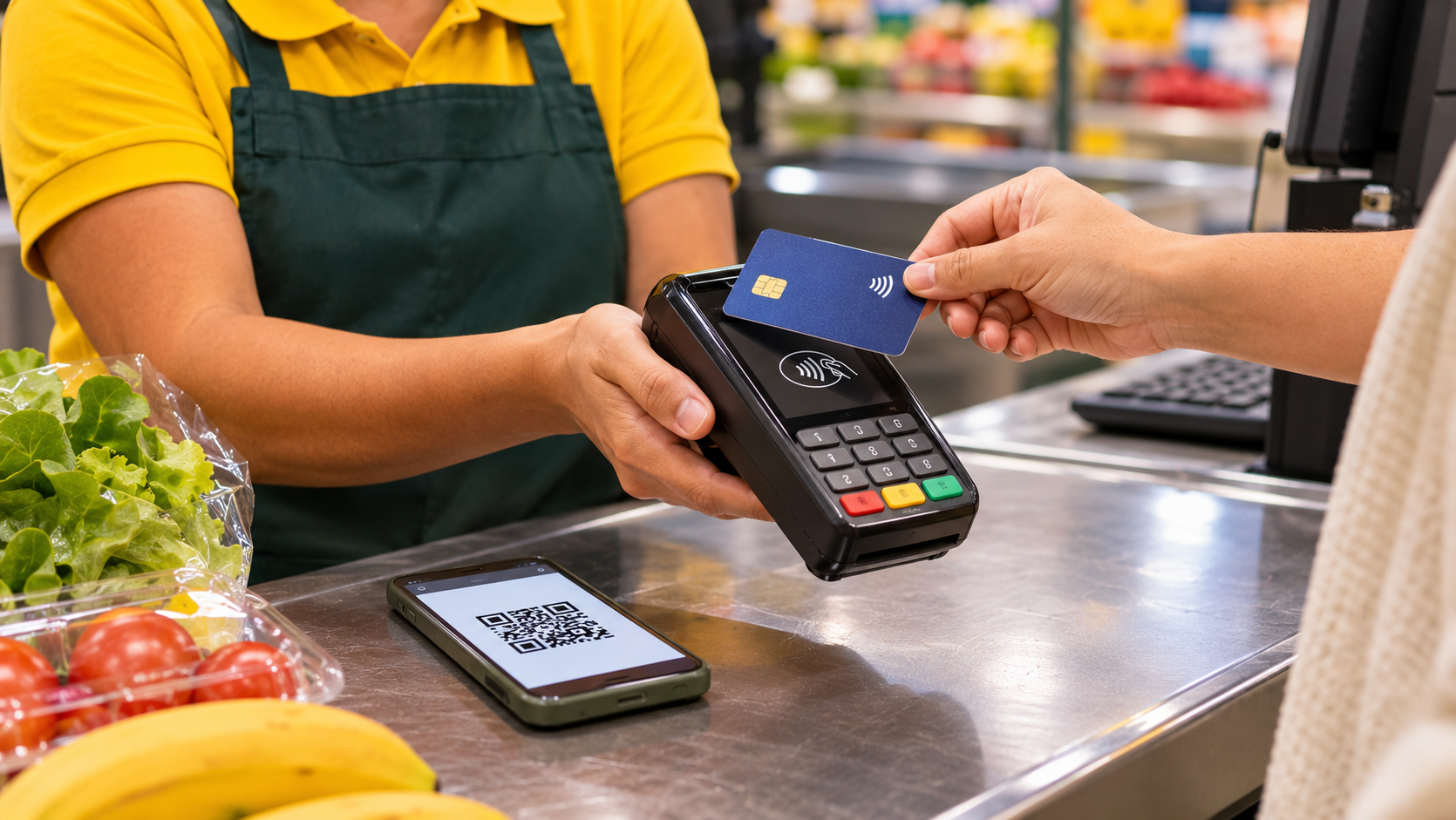
Vocês aceitam cartão de crédito? – Do you accept credit cards?
| Portuguese | English |
|---|---|
| cartão | card |
| dinheiro | cash |
| Pix | Brazil’s instant payment system |
| maquininha | card machine |
| Pode passar por aproximação? | Can I pay contactless? |
| Tem troco para cinquenta? | Do you have change for a fifty? |
About Pix: almost everyone in Brazil pays this way. Pix is run by Brazil’s central bank (see What is Pix? on the Banco Central do Brasil website), and it usually needs a Brazilian bank account, so most travelers pay by card. Contactless cards are widely accepted.
8. Reading Labels and Spotting Deals
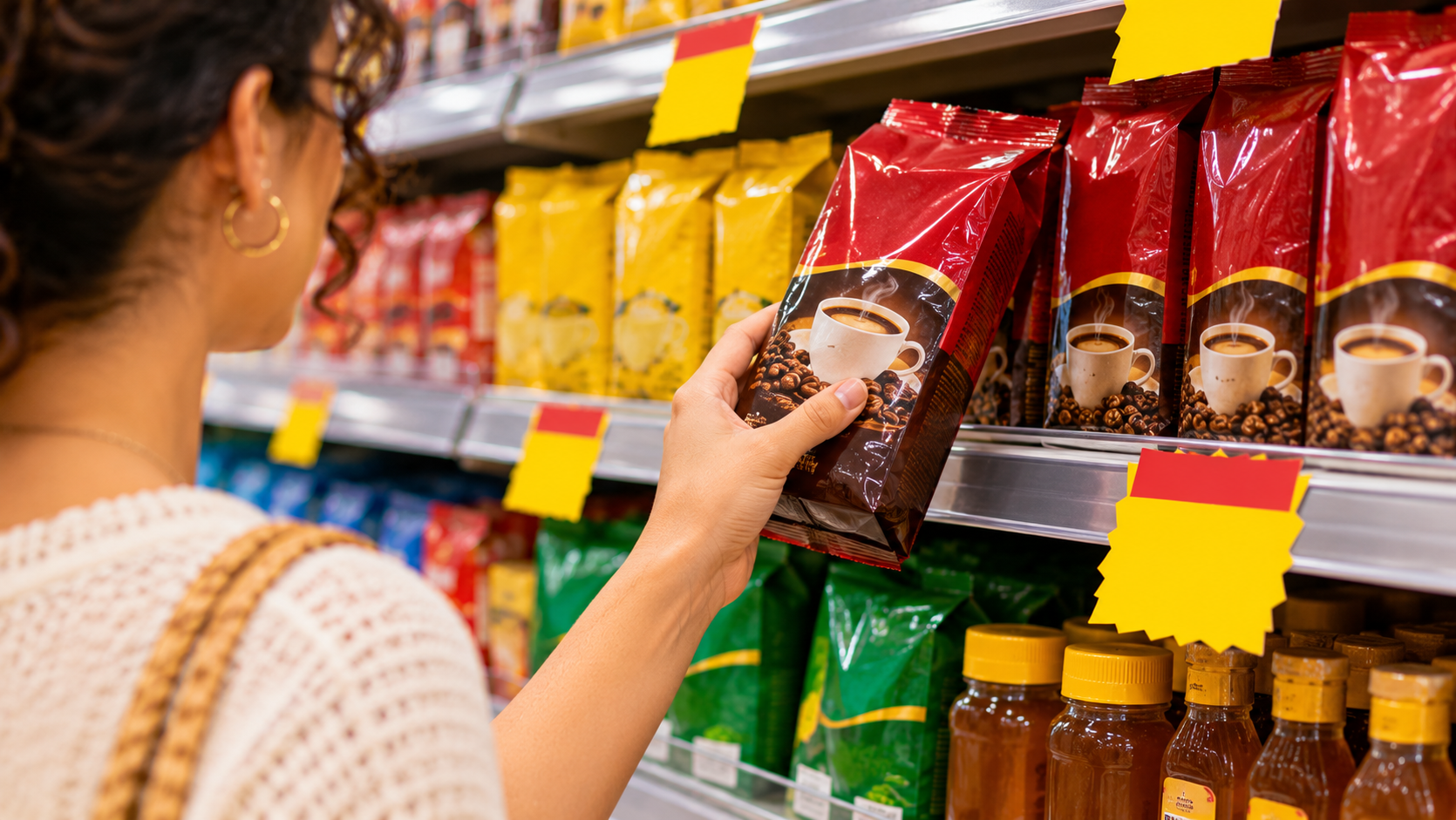
desconto – discount
| Label | Meaning |
|---|---|
| Validade | Expiration date |
| Preço | Price |
| R$/kg | Price per kilo |
| Peso | Weight |
| Promoção / Oferta | On sale |
| Leve 3, pague 2 | Buy 3, pay for 2 |
9. Saying Thank You and Goodbye
If you’re male, say obrigado. If you’re female, say obrigada.
| You’ll hear or say | Meaning |
|---|---|
| Muito obrigado / obrigada. | Thank you very much. |
| De nada. / Por nada. | You’re welcome. |
| Imagina! | Don’t mention it! (very Brazilian) |
| Valeu! | Thanks! (casual) |
| Tudo bem? | How are you? Answer: Tudo bem, e você? |
| Tchau, bom dia! | Bye, have a good day! |
10. Quiz: Are You Ready to Shop in Brazil?
Ready for your first Brazilian supermarket? Tap an answer to see if you’re right.
Question 1. The cashier asks “CPF na nota?” What does it mean?
Question 2. How do you ask for 200 grams of cheese?
Question 3. You hear “doze e noventa.” What’s the price?
Question 4. The item you want is far away on a high shelf. What do you say?
11. Grocery Shopping in Brazil FAQ
Do I need to speak Portuguese to go grocery shopping in Brazil?
Not fluently. Pointing, a greeting and a few phrases like Quanto é? and Esse aqui, por favor will get you through most trips, but knowing the cashier’s questions makes checkout much easier.
What does “CPF na nota” mean?
It means “Do you want your CPF (tax ID number) on the receipt?” Brazilians use it for tax refunds and rewards. Visitors can simply say Não, obrigado/obrigada.
Can tourists pay with Pix in Brazil?
Pix usually needs a Brazilian bank account, so most visitors pay by card or cash. Contactless cards are widely accepted.
Do I have to tip the bagger at a Brazilian supermarket?
No. Baggers are a normal part of many supermarkets, and you don’t need to tip them.
12. Final Thoughts
Grocery shopping in Brazil is easier than it looks: greet the staff, point and say esse aqui, listen for the price, and answer não, obrigado to CPF na nota? You’re ready to shop like a local.
Ready to go beyond the grocery store? Start with our free Shopping vocabulary list:
FREE VOCABULARY LIST
Must-Know Portuguese Shopping Words
24 words for stores, payments, discounts and returns, like cartão de crédito, recibo and desconto. Sign in to study them for free.
Study the ListLearn Brazilian Portuguese for real-life situations
From the supermarket to restaurants, taxis and small talk, PortuguesePod101 has 2,000+ audio and video lessons from native teachers that prepare you for real conversations in Brazil.
Start Learning for FreeYour turn: how would you ask for 200 grams of cheese, sliced thin? Write it in Portuguese in the comments!